03.6.2012 | 11:29 am
I have been thinking about myself lately and have come to the conclusion that I am, in many (perhaps most, and possibly all) ways the epitome of what a cyclist should be. Which is to say, I pedal smooth circles. I wear my glasses on the outside of my helmet straps. I shave my head to increase my aerodynamic properties.
I carefully match my shorts to my jersey, which are both matched to my socks. I have both a black helmet and a white helmet, and my selection of which I shall wear on a given day depend on a carefully-considered algorithm that takes weather, duration of ride, and what I am wearing into account.
I shave my legs thrice weekly. Mondays, Wednesdays, and Fridays, since I am sure you are wondering.
I have a bike for every occasion I can think of, as well as a couple of bikes for which I have not yet thought of occasions, but anticipate some appropriate occasion arising, at some point in the future, and thus want to be prepared for this hypothetical cycling opportunity (E.g., I have a track bike, just in case a velodrome appears nearby; I also have a second track bike, in case a friend wants to come along to the suddenly-existing velodrome).
I also have a cyclocross bike, although I defy the current cyclocross fad by not using it. Once all the cycling magpies have turned their attention elsewhere, I shall commence to race cyclocross, and am confident I shall dominate my racing category, just as I do in any
Further, I revel in all aspects of cycling. Which is to say, I relish a good climb and celebrate the agony of really good climb. I ride with unparalleled power when on the flats, my quads a bottomless pit of smooth strength.
I take my turn pulling, and keep the group together with an almost preternatural sense of how the paceline behind me is doing. I pull just hard enough that nobody gets a free ride, but not so hard that I drop others. When people finish riding with me, they often describe the experience as “transcendental,” even if they are not familiar with what the word “transcendental” even means.
I hold my line.
I offer advice, but only helpful advice. I avoid indulging in passing along speculative opinions offered by others, preferring instead to offer practical, time-tested guidance based on an unimpeachable source: myself.
I am well-versed in the goings-on in the world of pro cycling. I do this primarily because pro cyclists are always contacting me, asking me for advice on nutritional strategies and race tactics. At some point, I am going to have to call Levi Leipheimer and tell him to stop giving out my number, because it’s starting to get tiresome. If they offered to pay for this advice, that would be different, but you’d be astonished at what cheapskates most pro cyclists are.
I know exactly what to wear for any cycling occasion. Is it sunny now, but the weather prediction is for sleet in one hour, followed by rain, followed by wind and then sun again? I will layer properly for the ride and never be uncomfortable during said ride. My weather / clothing sense is uncanny. It cannot be canned. Don’t even try to can it.
I am willing to hear other opinions. When I render a verdict, however, you can be confident that it is correct, and you will be well-served to adopt my point of view as your own.
I pick the right line. Follow it without question, and your riding experience will be vastly superior to the one you would have had in the event you had followed any other line.
When I race, I race to win. And yet, I am able to separate the experience from the objective, so that even as I am turning myself out with an intensity you can’t even imagine (go ahead and try. There. You failed.), I am likely to notice the beauty of both the site and sound of a leaf as it rustles on a branch as I go by. After the race is over, I will congratulate those both those I defeated, and those whom I allowed to go on ahead of me, as a courtesy, because I know that some people are not self-actualized and therefore need external validation to feel good about themselves.
I use nothing but the very finest lubricants for my bicycle chains.
I can ride for hours — or, should I choose to prove a point, for days — without food or drink. However, when I do eat something while riding, I easily and fluidly reach behind me and grab whatever it is I am going to eat, remove the wrapper, eat the food, and then put the wrapper back in my jersey pocket — all without any difficulty whatsoever. During this process, I do not deviate even half an inch off my line.
Finally, I can ride no-handed.
I assure you that as efforless as I make this look, It is not easy — indeed, it takes a great deal of work — to be the finest cyclist in the world. I do it for you (and others like you), however, because I want you to have something to aspire to.
You’re welcome.
Comments (88)
03.1.2012 | 2:03 pm
A Note from Fatty: This is the latest post in my effort to tell the story of Susan’s fight with cancer. Eventually, this will be part of my next book, Fight Like Susan.
Neither of us could sleep the night before Susan’s first chemo treatment. We had too many questions about what it would be like.
How sick would it make her feel?
How soon would it make her hair fall out?
Would she always be sick from now on, or just right after the chemo?
And the biggest question of all: How would we know if it was working?
The problem was, the only question we had any kind of answer for was the trivial one: Her hair probably wouldn’t fall out in any serious way until sometime after the second treatment. For everything else, our answer was the terrifying unknown: “Wait and see.”
The Treatment
The people at my new job were unfailingly supportive of my need for some work flexibility. Maybe part of it had to do with my manager already being a good friend of mine, and my manager’s manager being one of the almost absurdly-nice Osmond family (yep, I had lived in Utah for most of my adult life, but never met an Osmond ’til I moved to Washington).
Or maybe it’s just that most everyone has had contact with someone with cancer, and so want to help.
In any case, there was no question about whether I’d take the afternoon off to take Susan to the hospital for her first treatment. Eventually, we figured, a friend or family member would take her and I could do my job. But for this first one, it definitely needed to be me.
The thing is, though, there just isn’t much to tell about a chemo session.
Susan sat in one of the big comfy chairs they had set up for chemo. A nurse plugged the IV bag full of the chemo stuff – being very careful not to get any on anyone’s skin, because it burns — into Susan’s portacath.
Geeky sidenote: A portacath is a permanent little plug doctors install in people who are either going to be giving a lot of blood or getting a lot of IV’s, or both. Imagine a little drumlike thingy right under your skin, somewhere on your chest. The needle, instead of going into your vein, goes through your skin and into the drum, which then leads to a vein. Having one makes it a lot easier for the nurse to hook you up to the IV. They’re a great invention; Susan had gotten one implanted at the time of her mastectomy.
Once hooked up to the IV, we sat there, waiting for something to happen.
Nothing happened.
We tried to talk for a while, but we were both too anxious to talk. Eventually, Susan got out the little portable DVD player we had brought along, and watched a TV show — Buffy the Vampire Slayer, I’m pretty sure.
In a little while, we were done.
Quiznos
The thing is, Susan felt fine after the chemo. Seriously, just totally fine. The doctor had said that — rarely — patients are able to go about their daily lives without being seriously affected. Maybe we had gotten lucky and Susan was one of those people!
I felt great. And, to be honest, hungry.
So I suggested we stop by the Quiznos (for those of you who don’t know what Quiznos is, it’s a toasted sandwich chain in the US) and split a sandwich. I don’t remember what kind of sandwich we got, but I remember it was really good.
By the time we got home ten minutes later, Susan felt sick.
Ten minutes after that, she had thrown up.
Ten minutes after that, she felt worse than she ever had in her entire life. Curled up in a ball and crying, laying on the bed, Susan was throwing up over and over, and then she was dry heaving.
And when she wasn’t retching, she was saying that she hated Quiznos worse than anything in the world.
Help
Of course, it wasn’t really Quiznos that was at fault. Susan and I had split a sandwich and I was fine. It was the chemo, pure and simple.
The anti-nausea medication wasn’t working. Obviously.
I called the number for the oncologist. A nurse specially assigned to be the cancer patients advocate and answer-person got to the phone, and I told her what was going on.
“Some people do really well with some anti-nausea medications, some do beter with others,” she told me. But we weren’t out of options. Not even close. She called in a different medication to the pharmacy. I went and picked it up.
No luck.
So she called in a third anti-nausea medication. This one was new, she told me. And expensive.
Not-so-geeky sidenote: You may have noticed that I’m not mentioning specifics about medication here, nor disclosing doctors’ names. In large part, that’s because I’ve learned a pretty important lesson about talking about medication and doctors on the web. Specifically, no matter what you’ve done, there’s someone who will tell you (with great conviction and often considerable condescension) that you did it wrong; you should have used this doctor and that medication. Frankly, I’m not interested in having those conversations. They weren’t helpful when Susan was alive, and they certainly wouldn’t be helpful now. Everyone’s case is different. Knowing who and what Susan worked with won’t help anyone, any more than my hearing that I should have done something I didn’t do will help me.
I went and got it. If I’d had to pay, it would have cost $50 per pill. Somehow I would have come up with the money for it, but I was glad I didn’t have to.
This one worked.
By the end of the evening, Susan was feeling better. Not great, but tolerable.
It was the best $100 / day expense I have ever had.
Regardless, though, Susan never ate at Quiznos again.
Comments (39)
02.29.2012 | 1:21 pm
A Note from Fatty: This is the latest post in my effort to tell the story of Susan’s fight with cancer. Eventually, this will be part of my next book, Fight Like Susan.
If you were to visit my house, you’d notice one artist’s work dominates the whole place: Lori Nelson. Exactly twenty of her paintings can be found on our walls (I just counted).
The biggest part of that has to do with the fact that I genuinely love her work.
Part of it is that she’s my sister.
And part of it is that she’s helped my family get through some times I wouldn’t have thought we could get through.
When the twins were born, Lori’s gift was a painting she made for the occasion: Entwined.

This painting now hangs in the twins’ bedroom, and is one of the things I would grab for if the house were on fire. The other identifying feature in the twins’ room is a wall mural (about eight feet wide) Lori painted for them:
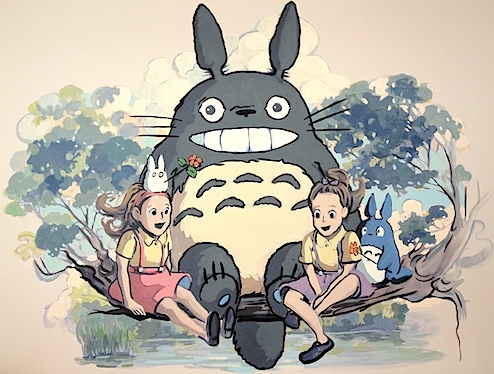
Those of you who have kids that love My Neighbor Totoro as much as my twins do will have a pretty good idea of how awesome this mural is.
But I’m drifting away from the story I need to tell.
First House of Three
While Kenny and I drove to Washington — saving us the money it would have cost to transport the cars, which meant Microsoft gave us that badly-needed money, instead of the car transporting company — Susan and Lori flew the family to our new home state. I met them at the gate (this was back when you could meet people at their gate), and was astonished that everyone seemed to be in a good mood.
I then drove us to the apartment we’d be living in for the next two weeks, while we waited for the larger rental home we’d been promised to open up.
And we set about doing our new jobs. I went to my first day of work at Microsoft. Susan met with her new oncologist — Tena (my friend and manager’s wife) — had done all the research to find us a fantastic oncologist, so all we had to do was transfer Susan’s records and show up.
And Lori took care of us for a week. She bought and made food, entertained the kids, and in general helped us feel a lot better about the temporary apartment we’d be living in while we waited for the temporary house we’d be living in while we looked for a house to buy.
And when Lori wasn’t taking care of us, she painted. But she didn’t show us what she was working on.
Odds
The night after Susan’s first visit with the oncologist, Lori told Susan and me to take the night off. Go out on the town. Explore Issaquah. So Susan and I went to see a community theatre production of To Kill a Mockingbird.
While we waited for the play to start, Susan told me about the visit, and about the plan. Susan would start chemo very soon — as soon as she had recovered enough from the mastectomy to handle it. Just a couple of weeks. She’d feel sick sometimes, but mostly just tired. They had good drugs for combatting nausea now, and since we had superpremium health insurance (I felt a surge of pride), we could get whatever we needed, whenever we needed it. The cost of meds was no object.
Even so, Susan told me, cancer treatment was a game of odds.
If she had done nothing — no surgery, no chemo — the odds of surviving breast cancer were very low. Negligible.
With surgery by itself, the survival rate went up, but not to a very good number. I think about my grandmother — my dad’s mom, who I never met.
With surgery and chemo, the survival rate went up well into the 80-percent range. With surgery and chemo and radiation, the number budged a tiny bit more.
I don’t remember the exact numbers, but I remember being struck by both how good and simultaneously bad eighty-something percent sounded.
That would be a “B” if it were a grade, I thought. Not an “A.”
“Everything will be fine,” I told her. And me.
Video Night
The next night, Lori got out a DVD she had brought with her — something she had gotten on NetFlix (yes, NetFlix was around back then): American Splendor, a semi-autobiographical movie about Harvey Pekar.
What none of us knew going into the film was that Pekar had gone through cancer, and this film went into a gritty, darkly-realistic depiction of his treatment.
With Susan’s chemo about to start in a couple weeks, the timing for this kind of thing couldn’t have been worse. Susan cried and went into the bedroom, where she sobbed for the rest of the night. I followed and comforted her as best as I could, wishing I knew enough to be able to say, “It won’t be that bad.”
And then, even though I was still thinking about the percentages Susan had told me about, I told her, “We’ll get through this. You’ll be fine, and then we’ll forget about cancer forever.”
Meanwhile, back in the living room in our apartment, Lori was mortified.
I told her later that night that it was OK; she couldn’t have known. We’d have to get used to hearing about cancer. I didn’t realize at the time how sensitive I’d eventually become to the word “cancer” in the following months and years.
Parting Gift
Susan’s mom was coming to help out the following week, so Lori got ready to go back home. I think if I could have found a way, I would have kept Lori with us permanently, though. There was something incredibly reassuring about having my sister with us. Smart, funny, practical, and — above all — kind: that’s Lori.
The day she left, Lori gave Susan the painting Lori had been working on while she was with us:
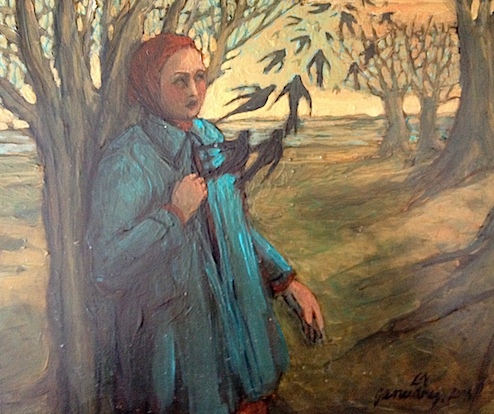
It’s a small painting: about 10″ x 8″. I don’t think it has a title.
But it expressed, perfectly, what we all wanted.
Comments (30)
02.27.2012 | 4:19 pm
A Note from Fatty: This is the latest post in my effort to tell the story of Susan’s fight with cancer. Eventually, this will be part of my next book, Fight Like Susan.
When Susan came home from the hospital, she needed rest. The problem was, our home was not exactly a restful place. We had four children: 10 and 8 year-old boys, twin two-year-old girls. I had an old job I was wrapping up, along with a new job to get ready for.
We needed to get the house ready to sell. We needed to start looking for a new home. We needed to find an oncologist in Washington, so Susan could start chemo pretty much as soon as we got there.
Luckily for us, we had good neighbors — people who were ready, willing, and able to jump in and help.
Unluckily for these good neighbors, I was an unappreciative jerk.
There were always friends of Susan at our house. One would be taking care of Susan. One would be helping with the twins. One would be making or bringing food over.
I would avoid them all, hiding in my office. Pretending that I had other stuff to do. Pretending I was working, even after I had pretty much transferred my duties over to the guy who’d be taking over for me.
Not meeting people’s eyes when I saw them in the house.
And not thanking people for taking the time to come over and help.
What Is My Problem?
I knew our family needed help; we had too much going on for me to take care of alone — and Susan couldn’t / shouldn’t do much. But I felt so many negative things about the people who were there, helping.
I felt ashamed for making Susan move away from friends and family, when she clearly needed that help and support.
I felt embarrassed for the state of the house: it wasn’t just messy; it was dirty. I remember one person chasing dust bunnies across the floor as she tried to get the floor in order, and how humiliated I felt that there was cleaning up of this magnitude to do. Having neighbors clean up after my family’s mess felt like an indictment of my parenting and partnering skills.
I felt intruded upon; with neighbors constantly in the house and around Susan, I felt like I hardly ever had time to talk with her in private.
And I was scared. Scared to move. Scared that I wasn’t ready or good enough for the responsibility I was taking at a new company.
And to be honest, I was so wrapped up in my own anxiety and selfishness and embarrassment, I didn’t even wonder how Susan was feeling about this time.
Moving
Like most people, I don’t see usually see myself as the villain in my own personal story. But on the day the moving van arrived and the professional movers broke down, packaged, and loaded everything we owned over an afternoon, I felt like I was the bad guy, pure and simple. Susan sick and weak and about to embark on a difficult course of treatment. The boys both crying, about to leave the only house they had any memory of.
And me, the cause of it all, not able or willing to express gratitude to the people who were helping us.
I was miserable. Perfectly.
Then I left them all. In order to save money, I drove one of the cars out to Washington, with my friend Kenny driving the other. Susan and the kids would fly over the next day, with my sister Lori helping.
I remember climbing into the car to start the long drive, leaving Susan and the kids to themselves for their last day at home.
I remember feeling so relieved to know that I would have a whole day to myself. Just driving, alone with my thoughts.
I remember feeling ashamed to be grateful for this time alone.
I look back now to how I felt then, and my now-self feels sorry for my then-self. I was a young (early thirties!) guy in a ridiculously difficult situation. I’m actually pretty impressed that I held up at all, under the circumstances.
Eventually, I would learn to accept kindness and help whenever it was offered, by whomever offered it. Eventually, I would even learn to ask for help.
But not yet.
Comments (30)
02.23.2012 | 7:30 am
A Note from Fatty: This week, Gaz, who blogs as ” The FORMER Super Morbidly Obese Cyclist” will be taking over my blog. He’ll be describing his journey from fat to fit, as well as answering your questions about how it’s possible to lose a lot of weight (in Gaz’s case, hundreds of pounds) by riding.
Welcome to my final installment! I just wanted to start by giving HUGE thanks to Fatty for giving me this forum to reach out to you guys, Hopefully it will have helped a few of you on the road to recovery.
Before:
- I USED to suffer from a TOTAL lack of confidence
- I USED to suffer from a TOTAL lack of self-worth
- I USED to suffer from a TOTAL lack of self-belief
The thing is, and this may sound CRAZY, I didn’t know I “Suffered” from the above at the time.
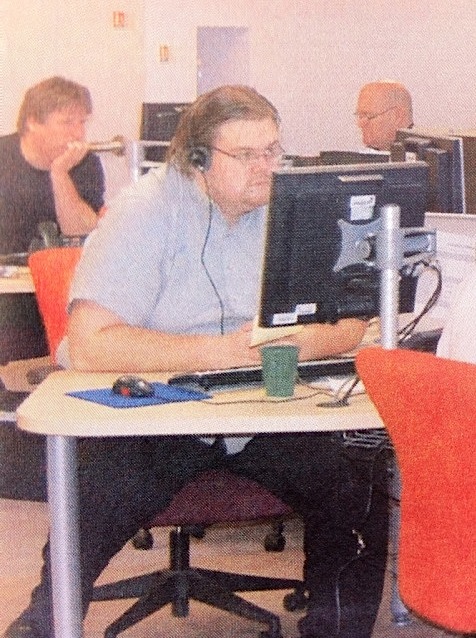
However, looking back, I cant help but get excited at how I have changed, I have been promoted at work, I walk round with an assuming air of confidence, going as far as to give a motivational talk on weight loss, to adults who needed it.
I said to myself at the start that I could, if I worked REALLY hard, lose 200 pounds, but I’d still be obese if I did, but it was better than not losing anything.
I didn’t have the confidence at that stage to say “I can and will do this.”
Food
A question I get a lot is “what’s your diet?” My answer is that I don’t have a diet, diet is an EVIL word, people in my situation don’t need a diet, diets don’t work!
What we need(ed) is a change of lifestyle, you need to look at what you are putting into your body and then what is leaving your body via exercise.
What If I go over one day?
It’s REALLY not an issue, if one day you want cupcake, muffin, or any other treat. It’s FINE to do so, don’t ever restrict yourself. It will just make the cravings and ensuing binge even worse. All you need to do, is have your treat but make sure that after it you work it off!
A few more tips on food/weight loss I can give are:
Smarter Shopping: The golden rule here is to NEVER EVER go food shopping hungry. You make the decision to eat biscuits and crap food’s when you buy them in the shops, not when you take them from the cupboard. Don’t buy them in the first place.
Make a Goal list: – write down achievable goals.
And by far and away, the simplest tip ever is: “Eat less and move more” – Common sense I know but it’s what every single weight loss plan is based on, trust me!
After
Where am I now, mentally?
- I am currently filming for a national TV show in the UK relating to my weight loss and issues around my skin. A few years ago, I wouldn’t even have spoken on the radio, never mind get on a prime-time TV show.
- I have hit over 220,000 hits on my blog, wherein I go into as much detail about weight loss as my readers ask me to.
- I have done motivational speaking and am putting myself out there to do even more.
- I have given interviews to many UK newspapers and cycling magazines, again, in the hope that I can inspire just one person, who was like me, to save their life.
- I now know if I say I will do something then I WILL DO IT and will be successful at it.
- I also understand the importance of saying to myself “WELL DONE”, it took me a while, to stop, review what I had done and then acknowledge that what I had
And something that people might not get , cycling related, is that when I am sat on someone’s wheel, if I say that I will drop them, either on a climb or in a sprint, then 90% of the time I will do it, that or die trying.
But then, there is nothing wrong with giving your best, not quite making it and then going back and having another go.
Ok, enough of my ramblings. Questions from the floor.
Byg Papi
Q. Hey Gaz, thanks for being an inspiration. At 360 pounds last year I rode my old bike until I lost enough weight to get my current bike. Although I have more gears now (21 instead of 7), I still have difficulty breathing. My question is did you have asthma or difficulty breathing and how did you handle it?
A: No, I never suffered in that way, I’d suggest that you seek medical advice, that way, if your body needs any help then it will get the help it needs.
Obstinate Roadie
Q. I just want to say I’m inspired, in a general way, by how you overcame your fear and shame, and fulfilled your duty to your children. Well done, sir.
A: I know its not a question, but you make a great point about fear and shame, the only thing people should be ashamed of is not even trying in the first place.
MellowJonny
Q. Gaz you are a true inspiration and I have lots of respect for you. My question is: How did you “get up” the courage to do that first ride? I’m sure it was hard, but I’m positive you are happy you decided to take it.
A: That first ride was hard and it was around 4 weeks after I got the bike, it had gotten to the stage where if was now or never, so I hooked up my MP3 player, to drown out any abuse , got on it and off I went, I couldn’t be any more happy in the choice I made that day J
Damian
Q. Fantastic job Gaz. You are an inspiration to all of us. What was your diet during the weight loss? Did you fuel for riding?
A: Thanks dude, my post covers the “Diet” but as for fuel for riding, no I did what is called “Bonk Training” — riding on nothing but liquid caffeine in the morning.
Webb
Q. You are such an inspiration. I wish more people would make the decision to lose weight with diet and exercise and not surgery. You are living proof that it can be done! I also like that you did it for your kids. I think that is so important! You are setting a great example for your children in so many ways.
A: Thanks, that’s the reason why I made my story public and do all I can to publish it, not for personal gratification, but to show other people just what can be done.
Limey
Q. Brilliant Gaz, you are such an inspiration, I have 50Lbs to go. What was up with the dogma?
A: Sadly, it was fake, I got “Done Over” on it.
Thanks again to Fatty for allowing me this chance, with Fatty’s permission, I’d like to say, if there are any further questions, ask them here and maybe Fatty will allow me to come back in a few months to answer any remaining questions?
Good luck everyone and LIVESTRONG!
Comments (23)
« Previous Page — « Previous Entries Next Entries » — Next Page »
